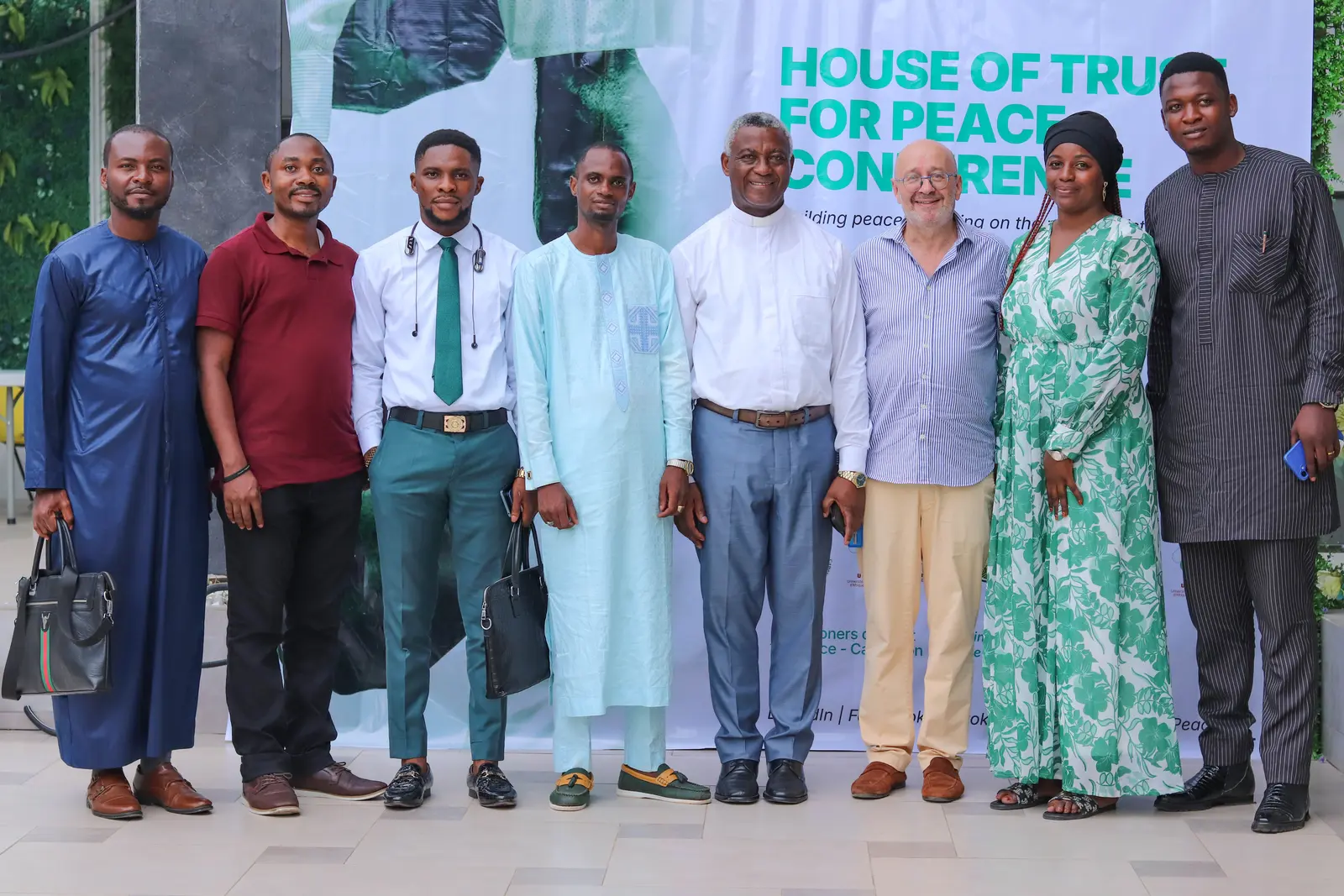
The context
A peacebuilding methodology needed to become a lived practitioner experience.
The challenge was larger than delivering content. The partnership needed a coherent learning journey that could help participants understand trust as a practical foundation for peace, apply specific tools, and begin shaping projects rooted in their own regional realities.
LFTH helped hold the architecture behind the experience: programme flow, facilitation rhythm, participant welfare, team coordination, learning materials and the transition from workshop insight to project development.
The response
Design for co-responsibility, practice and continuation.
The programme combined live examples, bilingual delivery, interactive exercises and concrete instruments including the Tree of Trust®, the Barometer of Trust and the Seven Habitus. Participants worked individually and regionally to translate learning into project ideas.
The delivery model also distributed responsibility across facilitators, partners and support roles, creating a visible experience of collaboration rather than a single-speaker event.
Evidence from the cohort
The strongest signal was not only satisfaction, but willingness to continue.
Results are drawn from 18 post-workshop respondents. They reflect participant feedback from the inaugural cohort and should be read within that context.
What this shows
Learning design is strongest when the event is only one part of the journey.
The programme worked because content, facilitation, logistics and post-workshop application were treated as one system. The next phase—regional and individual projects, check-ins and reporting—matters as much as the training itself.