The context
A committed team needed clarity—and room to breathe.
Nkwa’s team believed in the organisation’s purpose and wanted to grow with it. Pre-retreat discovery also surfaced the pressures that can accompany a fast-moving environment: changing priorities, uneven recognition, limited space to recover and a need for clearer shared direction.
That meant a conventional strategy offsite would not be enough. Before asking the team to plan another year of ambitious work, the retreat needed to acknowledge what people had carried.
The design response
Use what the team said to reshape what the team would experience.
LFTH translated the discovery themes into the architecture of the retreat. Strategic planning remained important, but it was held alongside recognition, honest reflection and practical conversation about sustainable ways of working.
What the retreat produced
Shared work, visible priorities and practical commitments.
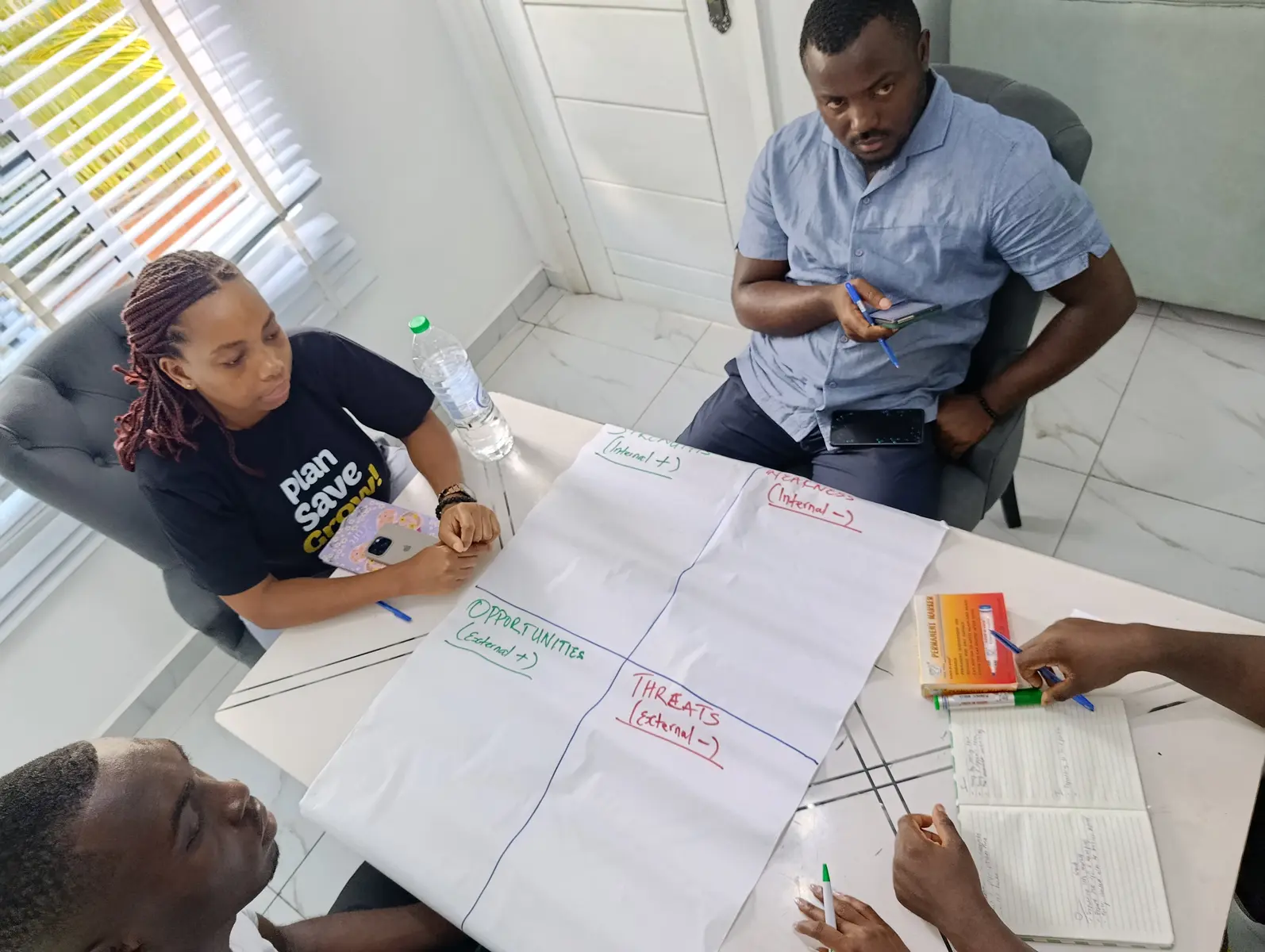
Participants worked in the room to name themes, organise priorities and make the organisation’s direction more tangible. The design moved between whole-team conversation, table work, reflection and recognition so that strategy was connected to lived experience.
The resulting plans and commitments created a clearer starting point for the year ahead. Their lasting value depends on leadership follow-through, consistent communication and whether the healthier rhythms established in the retreat become everyday practice.
This story describes the discovery and retreat-design process. LFTH is not presenting pre-retreat survey findings as evidence of post-retreat impact; longer-term outcomes require follow-up over time.
What this shows
Discovery is not paperwork before the real work.
When people are asked—and genuinely heard—their experience can change the design of the engagement. That makes a retreat more relevant, more honest and more likely to produce commitments the team recognises as its own.